
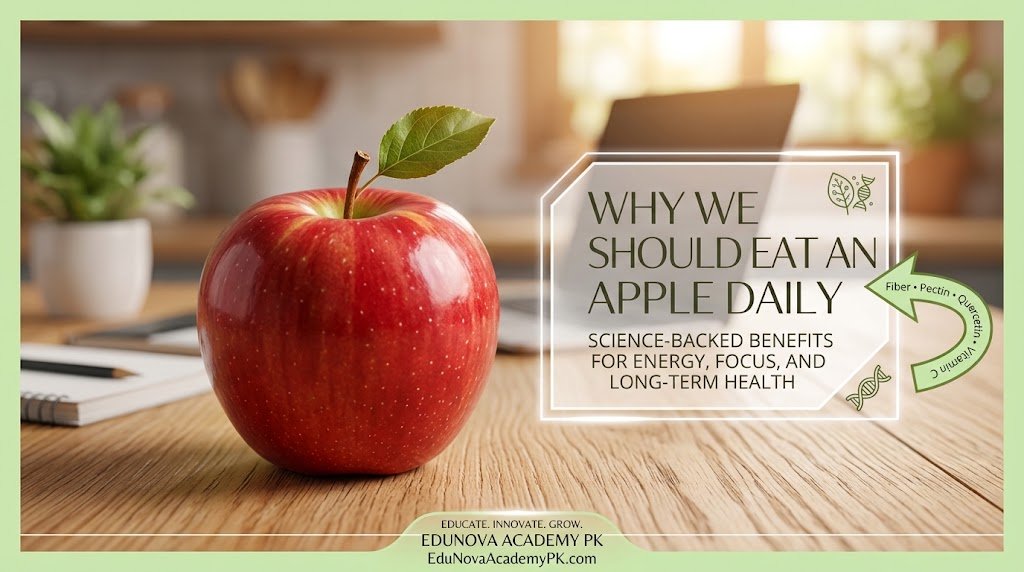
An apple a day is more than a saying—it’s a simple, science-backed habit that supports energy, focus, and long-term health. Apples offer steady fuel and protective nutrients that help the body and brain perform better every day.
Key Ingredients in an Apple and What They Do
A medium apple (with skin) provides roughly 95 calories, 25 g carbohydrates, 4.4 g fiber, about 19 g natural sugars, and around 8–9 mg of vitamin C. Beyond these basics, apples are rich in polyphenols—especially quercetin in the peel—plus pectin (a soluble fiber), catechins, and chlorogenic acid.
- Fiber (especially pectin): Slows glucose absorption, stabilizes blood sugar, and feeds beneficial gut bacteria. This helps prevent energy crashes during busy days.
- Vitamin C: Supports immune function and collagen synthesis, which matters for skin health and recovery from stress.
- Polyphenols (quercetin, catechins, chlorogenic acid): Act as antioxidants that reduce oxidative stress and inflammation, protecting cells in the heart, brain, and blood vessels.
- Water and low energy density: Apples are about 86% water and relatively low in calories, promoting fullness with fewer calories—useful for weight management.
How Daily Apple Eating Affects the Body
Regular apple consumption is linked to several measurable benefits:
- Better digestion and gut health: The fiber and pectin improve bowel regularity and support a healthy microbiome, which increasingly ties to mood and immunity.
- Steadier blood sugar and lower diabetes risk: Whole-fruit fiber and polyphenols improve insulin sensitivity; people who eat more whole fruits like apples have a significantly lower risk of type 2 diabetes.
- Heart protection: Soluble fiber helps lower LDL cholesterol, while polyphenols support healthy blood pressure and reduce cardiovascular risk.
- Brain and focus support: Quercetin’s antioxidant and anti-inflammatory actions may protect neurons from oxidative damage, potentially supporting cognitive health over time.
- Immune and skin support: Vitamin C and antioxidants enhance immune cell function and help maintain skin integrity—valuable for anyone under daily strain.
Practical Tip
Keep a whole apple (with skin) as a go-to snack between tasks or during long work sessions. It’s portable, requires no prep, and delivers fiber and polyphenols that juice or peeled slices often miss.

Conclusion
Apples are a compact package of fiber, vitamin C, and powerful plant compounds that together support digestion, stable energy, heart health, and long-term disease prevention. Making a daily apple a habit is an easy, evidence-based step toward staying healthy and focused.
Written by: Muhammad Adeel Farooq
References
BMC Medicine (Springer Nature). Higher adherence to a (poly)phenol‑rich diet is associated with lower cardiovascular disease risk.
https://link.springer.com/article/10.1186/s12916-025-04481-5
PubMed/NIH (American Journal of Clinical Nutrition). Intake of fiber from different food sources and type 2 diabetes risk.
https://pubmed.ncbi.nlm.nih.gov/41920710/
PMC (BMJ‑related cohort analysis). Fruit intake, fruit glycemic load, and type 2 diabetes risk.
https://pmc.ncbi.nlm.nih.gov/articles/PMC12893857/
MDPI Antioxidants. Polyphenols and Cardiovascular Diseases: Molecular Insights and Nutraceutical Advances.
https://www.mdpi.com/1661-3821/6/2/29
Frontiers in Immunology. Dietary polyphenols and human health: sources, biological effects.
https://www.frontiersin.org/journals/immunology/articles/10.3389/fimmu.2025.1653378/full
MDPI Nutrients / Microbiology review. The Role of Different Dietary Fibers in Modulating Human Gut Microbiota.
https://www.mdpi.com/1661-3821/6/1/18
Superb and beneficial for everyone